

Why Fusion spends more tokens on purpose
Fusion uses more AI sessions than a single-agent build. Our own runs show what that extra verification caught, where it helped, and when one builder is the better buy.
Fusion uses more AI sessions than a single-agent build. Our own runs show what that extra verification caught, where it helped, and when one builder is the better buy.
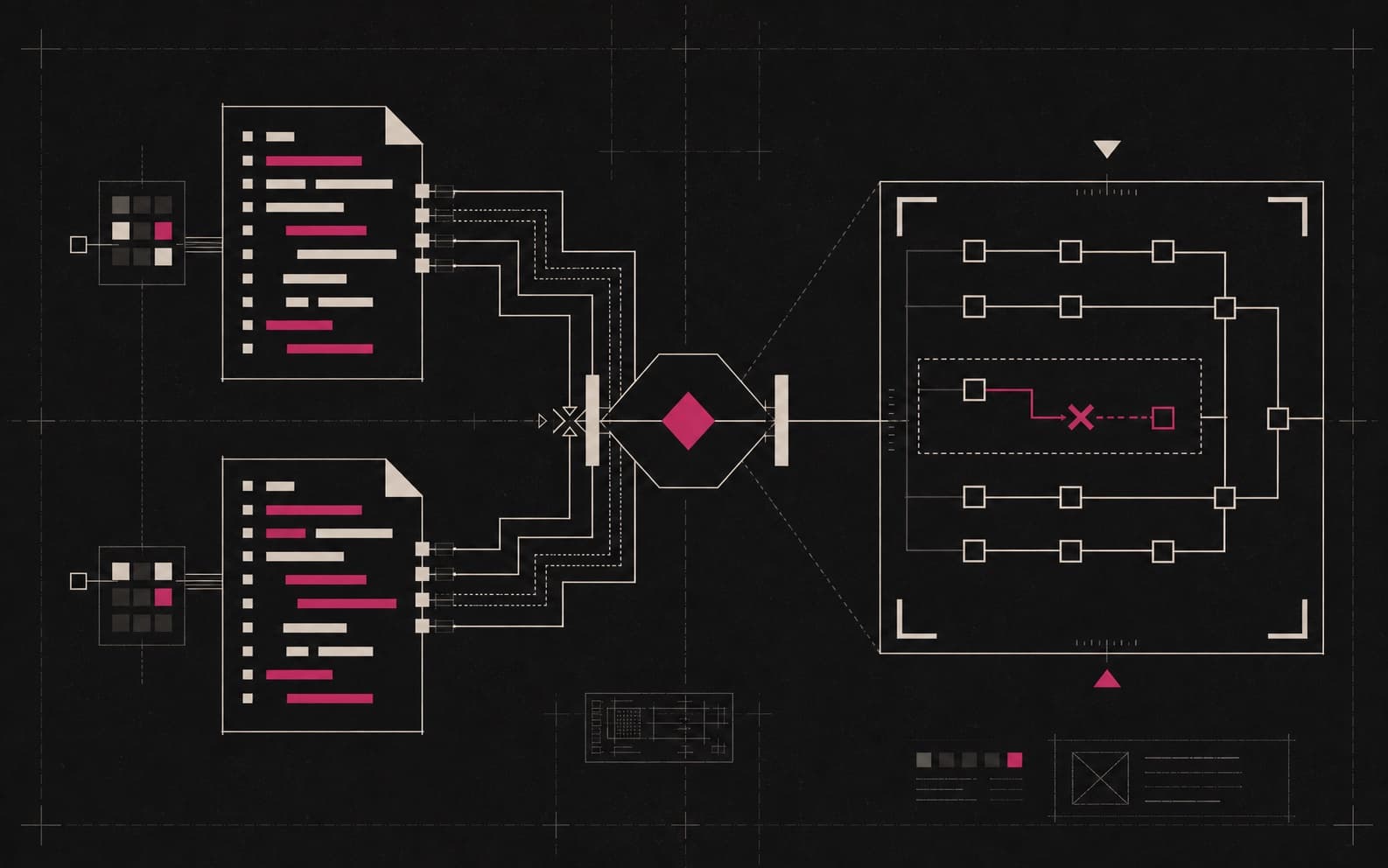
The first AI coding agents usually produced credible implementations. The biggest improvement came when fresh reviewers challenged the work, combined the best ideas, and tested the finished result through paths the builders missed.
A jury drawn from rival model vendors breaks family bias: a model grading its sibling's homework is a conflict of interest. Cross-vendor votes, blind packets, and preserved dissent make the verdict neutral.
Picking the best candidate leaves value on the table, but combining candidates creates new failure modes: dropped grafts, flattened dissent, new regressions. Fusion makes configured integrators produce competing complete finals, re-gates each one, and returns them to jury pass 2.
Judges stay blind during a run for fairness. After it closes, an outcome survey unblinds every role, and results accumulate into the win ledger: a per-engine, per-provider, per-model strength record that guides future roster choices.
After judging, an integrator builds one complete final from the winning candidate plus approved grafts from the others, then re-runs the gate. You merge one thing, not a pile.
Fusion runs the same task through competing coding agents in parallel lanes, then keeps only what survives judging. Competition is the quality mechanism, not a gimmick.