

Why Fusion spends more tokens on purpose
Fusion uses more AI sessions than a single-agent build. Our own runs show what that extra verification caught, where it helped, and when one builder is the better buy.
Fusion uses more AI sessions than a single-agent build. Our own runs show what that extra verification caught, where it helped, and when one builder is the better buy.
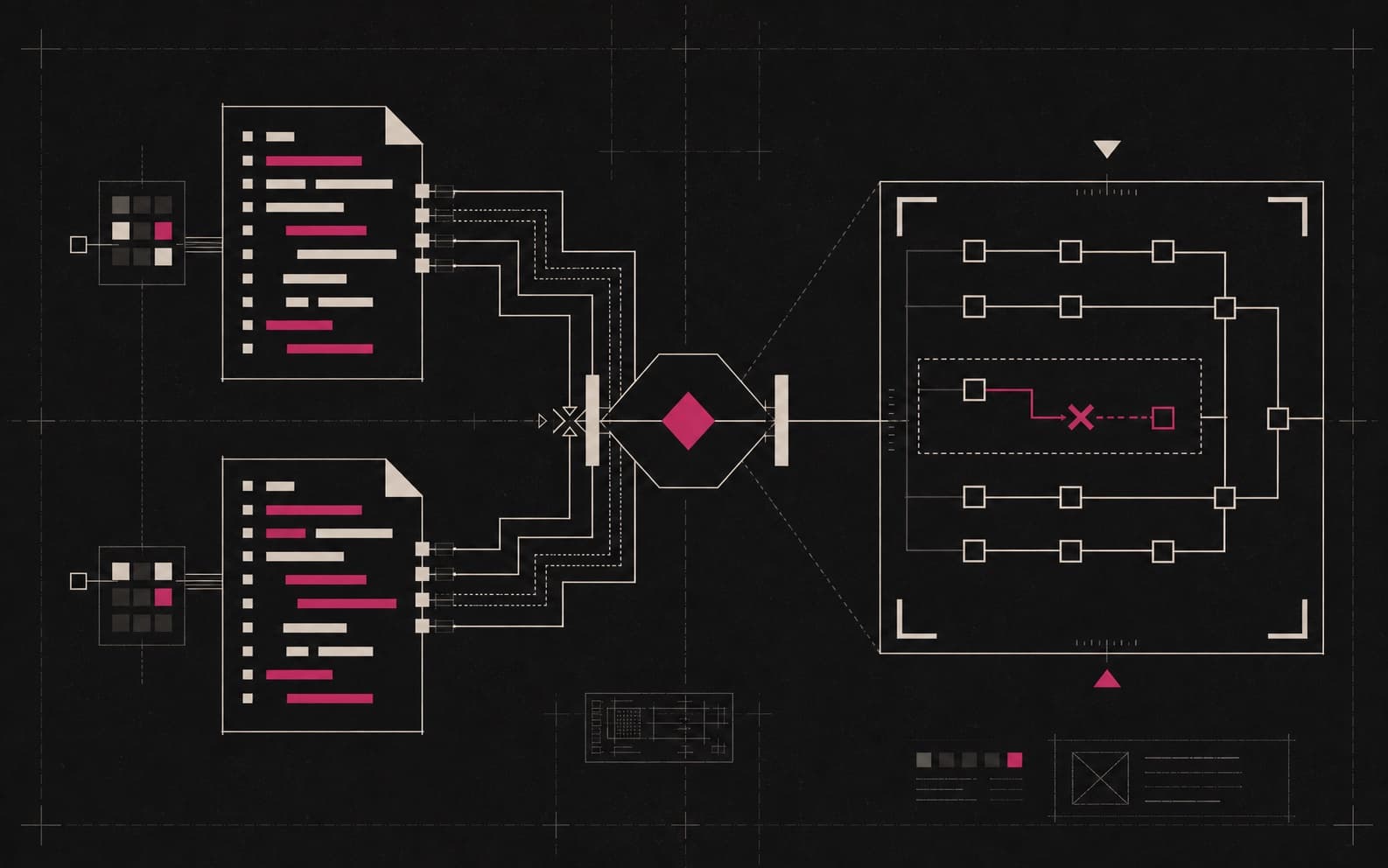
The first AI coding agents usually produced credible implementations. The biggest improvement came when fresh reviewers challenged the work, combined the best ideas, and tested the finished result through paths the builders missed.
A Verified Receipt means an objective gate executed and every hard criterion of a frozen contract passed, with evidence pinned to the exact commit. Not a summary, not a vibe: a checkable record.
A jury drawn from rival model vendors breaks family bias: a model grading its sibling's homework is a conflict of interest. Cross-vendor votes, blind packets, and preserved dissent make the verdict neutral.
A candidate can change implementation files, but it cannot redefine the protected checks that decide whether the result passed. Fusion restores gate-feeding inputs from the pinned base, verifies their fingerprints, then runs the objective command against the candidate SHA.
"Failed" is too small a word for a verification run. Fusion records typed stop states so the operator can distinguish bad code, stale evidence, jury contention, infrastructure failure, and a retryable publication problem. Each stop state needs a different recovery route.
Fusion's review can inspect an existing pull request, publish findings, and prepare bounded repair commits. It cannot silently cross into merge, release, or deployment authority. Repository owners keep the final mutation decision.
Verification can establish that a result is ready to ship. It cannot truthfully say the result shipped until a human authorizes the remote action and Fusion records durable delivery evidence afterward.
Verified versus accepted says whether the work met its contract. Customer-attested versus Fusion-attested says who controlled the machine that produced the evidence. Two questions, two fields, never one enum.
By default a Fusion run executes on your machine or in your CI: code and model keys stay inside your chosen trust boundary while the control plane coordinates and stores receipts. Managed execution exists, but it is an explicit choice.
Model identity comes from one place: the roster assignment the run lead records in the manifest before the run starts. We never reconstruct it from branch names, commit style, or output feel.
A run that misses its frozen Definition of Good is not billable. The failure still lands on a receipt; you just do not pay. Why we wired billing this way.
Fusion judges never learn which agent wrote which candidate. Packets are stripped of identity and independently randomized per judge, so verdicts attach to the work, not the brand.
Verified is a narrow, earned state: the frozen Definition of Good was met and the evidence exists. If a hard criterion, required gate, or required evidence is missing or unparseable, the run is not Verified. Ambiguity resolves against us; waivers stay visible on the Receipt.
AI made code cheap to produce and expensive to trust. The fix is not a better generator; it is a verification layer that proves what survived.